- Home
- “Yes, And…” Improving Math Play with Improv
- Althea’s Math Mysteries
- Avoid Hard Work, the Workshop
- Avoid Hard Work! …And Other Encouraging Problem-Solving Tips for the Young, the Very Young, and the Young at Heart
- Blocks and Modeling: A Do-It-Yourself Guide to Exploring Geometric Objects – Online Workshop
- Blog
- Books and Goods
- Bright, Brave, Open Minds
- Bright, Brave, Open Minds: A Problem Solving Kaleidoscope. Open online course for parents and teachers
- Camp Logic
- Cart
- Checkout
- Citizen Science Station
- Consulting and Tutoring
- Courses
- Download File
- Easy Complexity and Special Snowflakes Online Math Circle
- Empires: Year-long prealgebra program in a game
- Expedition Everest
- Five Fabulous Activities for Your Math Circle
- Funville Adventures: Math Personified!
- Funville Web Tour
- Hacking Math
- Hiding in Plain Sight: Vyshyvanka Secret Codes
- Home
- HOW do they do it? Creating your own math puzzles
- Inspired by Calculus: Online course for parents, teachers, and their children ages 5-12
- Kingdom On A Wall
- Kingdom on the Wall
- Ko’s Journey Is Discontinued
- Lapware
- Math Books
- Math Cafe
- Math Circles
- Math Circles 1001 Leaders Course
- Math Future event registration
- Math Future: come and talk!
- Math Goggles Challenges
- Math Renaissance
- Math Trek
- Mathematics & Poetry for All
- Meet the authors
- MidSchool Math Digital Math Tools
- Moebius Noodles
- mpsMOOC13: Problem Solving for the Young, the Very Young, and the Young at Heart
- Multiplication Explorers FAQ
- Multiplication Explorers LIVE workshop
- Multiplication Explorers Online Course
- Multiplication Explorers Registration
- Multiplication Explorers, the book
- Multiplication Models Poster
- My Account
- Natural Math Multiplication Course
- Online Logic Summer Camp for Kids!
- Online Summer Calculus for Kids Camp!
- Pay Natural Math
- Playing with Math: Stories from Math Circles, Homeschoolers, and Passionate Teachers
- Reviews of the Moebius Noodles book
- September 25: Math Storytelling Day
- Socks Are Like Pants, Cats Are Like Dogs
- Speaking and events
- Start Here!
- test001
- The Art of Factorization Diagrams
- The Iditarod
- The seven principles of Natural Math
- Transformers: Matrices & Graphs!
- Veronica’s Multiplication: a Natural Math circle online
- WOW! Multiplication – an open course in September 2013
- Ying and the Magic Turtle
- About Natural Math
- Contact Us
- Get Involved
The Dot and the Line Math Trek

Math Trek is a scavenger hunt game for families or informal groups. You walk around, discover math using the clues on the Trek Card, and take pictures of it.
During our Math Treks participants tell us about a strong, pleasant, slightly weird feeling: “I see your math in trees, buildings, people – everywhere! Now that you’ve shown me how to look, I can’t unsee it!” We call this effect math goggles. When you find the same pattern in several very different places, your mind automatically tags that pattern as important and universal, and encourages you to search for that pattern everywhere.
Natural Math, together with Cary Visual Art, ran a Math Trek through the downtown Cary sculpture exhibit on November 8. Our math and our art focused on dimensions, integration, and differentiation – in ways accessible even to young children. It was a cool, sunny Saturday, perfect for outdoor family fun. It was so good to see all the kids happily playing with calculus!
Now you can use the Trek Card we developed with your family and friends. We like to combine Math Trek with quick craft activities, as you can see in photos below. That way you not only discover mathematics all around but also make your own. Click to download the Trek Card PDF. If you would like to help us organize a math scavenger hunt in your area, drop us a line at reach.out@naturalmath.com


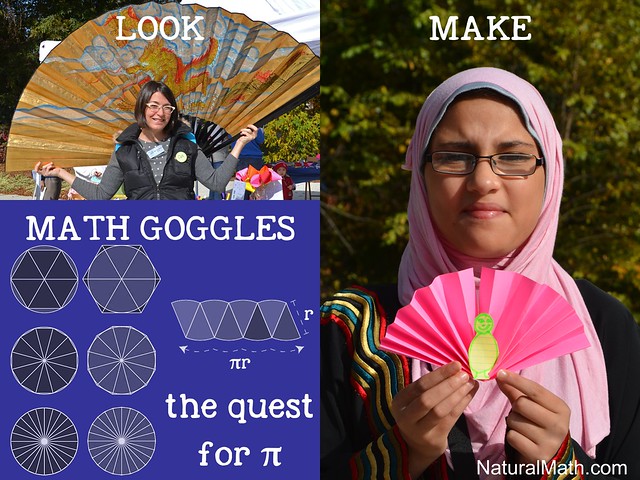
P.S. The name of the Trek comes from a 1960s book.


Posted in Make
Math Scavenger Hunt Nov 8, Enlightening Symbols, Make Thinky the Dragon: Newsletter November 4
Subscribe and read archives
Pinterest | Twitter | Facebook | Google+
Hello from Natural Math! Send us your questions, comments, and stories of math adventures at moby@moebiusnoodles.com
In this newsletter:
- Join Math Scavenger Hunt on Saturday November 8
- Enlightening Symbols: learn about history and culture in an online Math Future event with the author Joseph Mazur on Wednesday November 5
- Make it: Thinky the Dragon optical illusion
Join us for a mathematical scavenger hunt through art and nature
If you live near Cary, NC, join us on Saturday November 8, from 10 AM to noon as we explore the many dimensions of art and nature. This is a great opportunity to connect math to the world around you. We suggest you RSVP for this event by emailing cva@caryvisualart.org
If you don’t live near Cary, but would love to help us organize a math scavenger hunt in your area, drop us a line!
Is it for adults only?
Not at all! Our scavenger hunts are open to all ages. No prior knowledge of specific math concepts is required.
How much does it cost?
The event is free. It is a part of the Year of Sculpture initiative by the Cary Visual Art council.
What will it be like?
Check out this short video from one of our previous Math Treks. (That’s what we call our math scavenger hunts.)
For this Trek, meet us on the green in front of the Cary Arts Center to pick up your Math Trek card. It will have all the clues you need to successfully complete the Trek. Walk around Downtown Cary, enjoy this year’s sculptures, notice beautiful math, and take pictures of your finds. Come back to the green and try our hands-on activities for all ages.
Will I be able to complete the challenges if I am not a math whiz?
Absolutely! There are many answers to each clue and no prior knowledge of math is required. Open-mindedness, creativity, and curiosity rule the day! Check out a few sample clues from this Trek:

Art by Mary Jo Hoffman, Eric Troffkin, and Tom Friedman.
Will there be prizes?
Complete the challenges, e-mail us your photos, and be entered into a drawing to win a copy of our book, Moebius Noodles: Adventurous Math for the Playground Crowd.
How can I volunteer for this event?
We are so happy you’ve asked! You can volunteer at our math craft table or help us lead the tours. Email us at moby@moebiusnoodles.com
Learn about the history of math symbols at our upcoming Math Future online talk with the author Joseph Mazur
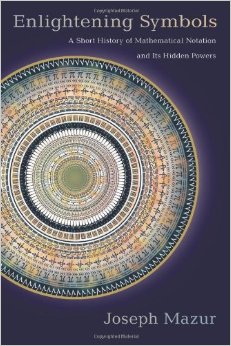
Hardly any math symbols were used before the sixteenth century. What did mathematicians rely on for their work before then? And how did mathematical notations evolve into what we know of today? Enlightening Symbols explains the fascinating history behind the development of our current mathematical notation system, shows how symbols were used initially, how one symbol replaced another over time, and how written math was conveyed before and after symbols became widely adopted.
On Wednesday, November 5 at 12pm EST, join us for the open, free online event in the Math Future series. Dr. Joseph Mazur will talk about his new book, Enlightening Symbols. Come and listen to a short presentation, chat with like-minded people in the audience, and ask Joseph questions.

https://test.naturalmath.com/math-future-event-registration/
Math Maker Corner
As soon as we saw this Thinky the Dragon video, we wanted to make one (or more) of these cuties ourselves. And you can too, by downloading and printing a free template with instructions from ThinkFun. How is this “hollow face” optical illusion mathematical? Watch this video to find out!
Sharing
You are welcome to share this newsletter online or in print.

Talk to you soon! Dr. Maria Droujkova and Yelena McManaman
Posted in Newsletter
More math circles, multiplication, Math Future: Newsletter October 16
Subscribe and read archives
Pinterest | Twitter | Facebook | Google+
Hi, I am Moby and I bring you the news about Natural Math. Send me your questions, comments, and stories of math adventures at moby@moebiusnoodles.com

In this newsletter:
- More math circles for more kids!
- Easy and cute multiplication puzzles
- Live open Math Future event: Russian School of Mathematics (US Northeast and online enrichment)
Watch out for a BIG announcement tomorrow!
We’ve been very busy creating something really big and exciting! What is it? It is something many of you asked for over and over – an online course unlike anything we’ve offered before. Usually when you sign up for our courses, you receive plenty of ideas for math games and activities. In this course, you will learn how to create your own activities and how to lead your own math circles (and you will still get lots of ideas for math activities).
We wanted to make sure that everyone who enrolls in this course gets individual attention and support from us, so we limited the 8-week pilot program to 20 participants. We will send a separate e-mail with all the details of the course (including an early-bird registration offer) at 10am EST on Friday, October 17th. Don’t miss it!
Who leads math circles and why?
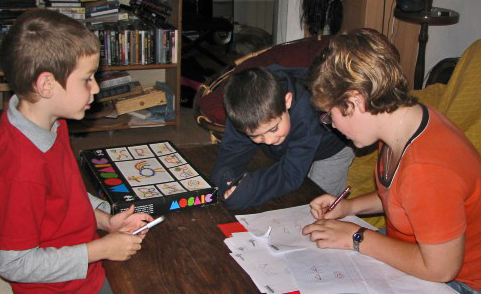
Anna Ignatov attended a math circle as a child, and then, as a mom, organized two circles for her two daughters and their friends. Since 14, Anna’s daughter Ida has been organizing math circles of her own: the third generation of circles, and counting! Why do they continue this tradition?
As Ida told us:
In school, we are taught that math is something boring, that we have to learn for some strange reason: you will need it in the future. Yeah, sure… It is nice to show the kids the beauty of math before they will learn once and forever that math is boring.
Read the entire interview with Anna and Ida in our 1001 Circles series and try a combinatorics game Anna and Ida shared with us.
Play this cute and easy multiplication puzzle with your kids
The new puzzle game Bojagi by David Radcliffe, which we review on the blog, is all about drawing areas. The rules are easy to learn, but Bojagi puzzles themselves are can be tricky to solve. Draw a rectangle around each number by clicking and dragging with a mouse. Each rectangle should contain exactly one number, and the area of the rectangle should be the same as the number it has. Rectangles must not overlap. That’s it!
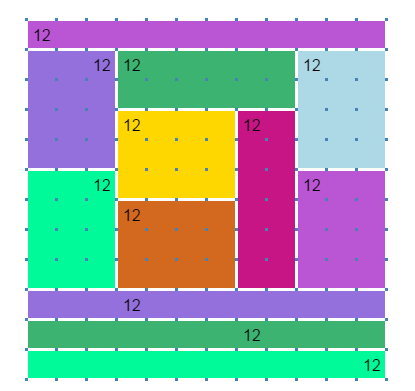
Playful and gentle, this puzzle will help your kids see multiplication as more than just repeated addition. Take turns making puzzles for each other. Bojagi interface makes drawing designs, using algebraic formulas, or just playing with shapes easy. An online game, like Bojagi, that you and your child can play together is a great example of a new development in gaming called “intergenerational game design”. It is also one of the guiding principles we use in designing all Natural Math activities.
Speaking of multiplication games, come November we will once again be offering our most popular course, Natural Math Multiplication. We will announce the exact dates and registration details in our next e-mail.
Live open Math Future event: Russian School of Mathematics

On Wednesday, October 22 at 1 PM Eastern Inessa Rifkin, Irina Khavinson, and Nina Dubinsky will talk about the Russian School of Mathematics, one of the largest enrichment programs in the Northeastern US. Come and listen to a short presentation, chat with like-minded people from all over the world, and pose questions for the founders of RSM.
Register to join the event and get notified when we post the recording.
Math Future is an international network of people who care about mathematics education: researchers, developers, teachers, parents, and students. Since 2009, it has organized more than a hundred live online events with leaders of amazing projects.
Sharing
You are welcome to share this newsletter online or in print.
Talk to you soon! Moby Snoodles, aka Dr. Maria Droujkova
Posted in Newsletter
1001 Leaders – Ida and Anna on three generations of math circles: “Math is nice!”
Why would you decide to lead a math circle? Anna Ignatov attended a math circle as a child, and then, as a mom, organized two circles for her two daughters and their friends. Since 14, Anna’s daughter Ida has been organizing math circles of her own: the third generation of circles, and counting! Read Anna and Ida interview to see how their wishes for different mathematics as well as their happy childhood memories of math circles inspired them to organize their own circles.
Ida: When the kids are thinking, they suggest ideas that you would never expect.
In our 1001 Circles series, we feature math circles stories from the point of view of a circle leader, who acts a tour guide. In the companion series 1001 Leaders, we put the spotlight on the leaders themselves. What got them started and what keeps them going? What are their math dreams and worries? If you lead a math circle, an engineering club, or an informal playgroup, we would like to hear your story or interview you. Write moby@moebiusnoodles.com to talk about your adventures.
What brought you to math circles?
Anna: Since the age of 10 I was participating in math activities for kids. When my daughter Ida started school, I was looking for some activities to show her the beauty of math, but I couldn’t find anything that looked nice enough. So I invited Ida’s friends and we started this adventure. Our group kept going for six years, until the kids turned twelve, with five kids participating. Later I organized another group for Ida’s sister and her friends.
The idea was to show that there are not only instructions on “how to do math”, but also a place for thinking. I was also trying to find connections between math we learn at school and our real life.
Ida: When I was 14, I tried to repeat my mom’s experiment. I led a group of six-year-old children under my mother’s supervision. This group met for one year. Later, when I graduated school and started at the university, a boy I babysat since he was born went to school, so I created a group for him.
In school, we are taught that math is something boring, that we have to learn for some strange reason: you will need it in the future. Yeah, sure… It is nice to show the kids the beauty of math before they will learn once and forever that math is boring. Otherwise, their only chance to find out that math is nice is at the university, and only if they choose to study math. Another great thing is to see them thinking and enjoying it.
When the kids are thinking, they suggest ideas that you would never expect. For example, we checked different shapes for symmetry by building them with magnets, or by folding paper. Children came up with their own definition of a symmetric triangle: “Two identical edges, and the third one is even.” A child’s answer might be wrong, but the way of thinking is creative. Children become very happy when they feel that they caught the idea or found the reason for something.
Can our readers try one of your favorite activities from your math circle?
Ida: Once we decided to check how many different “chains” (sequences) of five objects we can make. We had two green stickers and three blue stickers. Everybody made a chain, and then we checked together if we already had that chain or not. Little kids don’t know combinatorics theory, but guess what? We eventually found 10 chains.

After that, we made a “tree” of those chains. You start with the two options, blue or green. Then you build “branches” and reason: to this branch, you can add blue or green, but to this one, you can only add green, because you ran out of blue… We counted the branches, marking them with stickers, and found out that there were – you don’t say – 10 branches! Making chains and making trees were two different activities. We discussed the connections only after we made the tree. Children liked discussing the connections. We didn’t attempt a rigorous proof that we found all the combinations, but we discussed why the tree shows us all of them.
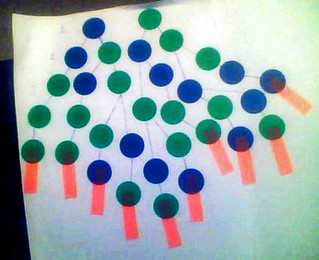
It took us three meetings to explore and model the problem in depth. Children understood that there are 10 and no more chains, and were interested in discussions. We took breaks from the problem when kids got tired, did other activities, and then came back to the problem at the next meeting.
Anna: One very popular activity was “programming the robot.” To start, we decided together what we wanted our robot to do. We used a little doll (“the robot”) and a chess board. At first we just wanted our robot to arrive to the given corner cell, from any other cell. We had cards with commands, like GO, TURN RIGHT, and also conditional questions, like AM I AT THE EDGE? The algorithm was built from these cards. The task for the doll was to arrive from any cell on the board to the corner. One of the kids was looking only at the algorithm, giving orders to the robot and asking questions. All the other kids were moving the robot and answering questions. [This is an incredibly rich math circle task; check out a story in our 1001 Circles series about a similar activity, by DrTechniko – MariaD.]
The activity inspired discussions with kids. For example, they wondered how a robot knew when to stop. Could it see? Maybe it had some kind of a switch that turned the robot off when it touched the edge of the board?
Then we wanted to define some new robot – and one of the kids proposed to create a flight simulator. We never finished it (I wonder why!) – but we had very nice discussions of what it was supposed to do. We talked about maps and scales, and even tried to guide a robot-pilot through the map.
We returned to the robot game during several meetings. The nice thing is, the kids led the activity, bringing their own ideas of what they wanted to do.
Can you tell us about a difficulty you had when you led math circles?
Ida: One of the difficulties I had with the kids was to make them concentrate. Our circles started at 6 PM, we were tired by that time, and it was often very hard for the kids to get into the lesson. So I decided to begin the lessons with something very intriguing, to catch the kids right away. Then we moved on to the calmer main activities.
Anna: We had one our lesson every week. Sometimes we had to reschedule, or a kid missed a meeting. Young kids do not remember much after a week, let alone two. So, there was the feeling that we were not moving anywhere! I started to record what was happening and to post if online for parents. It helped parents to discuss our lessons at home. Kids could not always explain what we were doing. These posts really helped with our progress, because the parents took a more active part in our mathematics.
What advice can you give to newbie circle leaders?
Anna: The visual part of every lesson is very important. For example, it was a nice idea to build the robot algorithm with cards, rather than just saying the commands. We always used some objects to solve logical problems. We used toys for the classic river-crossing problem, “How can we take a wolf, a goat, and a cabbage in one small boat that can only carry one of them?” Without the toys, it was really hard for kids to follow.
Ida: Don’t expect fast results. Be prepared to return to the same idea again and again, from different points of view. Some day children will surprise you!
Posted in A Math Circle Journey, Grow


