- Home
- “Yes, And…” Improving Math Play with Improv
- Althea’s Math Mysteries
- Avoid Hard Work, the Workshop
- Avoid Hard Work! …And Other Encouraging Problem-Solving Tips for the Young, the Very Young, and the Young at Heart
- Blocks and Modeling: A Do-It-Yourself Guide to Exploring Geometric Objects – Online Workshop
- Blog
- Books and Goods
- Bright, Brave, Open Minds
- Bright, Brave, Open Minds: A Problem Solving Kaleidoscope. Open online course for parents and teachers
- Camp Logic
- Cart
- Checkout
- Citizen Science Station
- Consulting and Tutoring
- Courses
- Download File
- Easy Complexity and Special Snowflakes Online Math Circle
- Empires: Year-long prealgebra program in a game
- Expedition Everest
- Five Fabulous Activities for Your Math Circle
- Funville Adventures: Math Personified!
- Funville Web Tour
- Hacking Math
- Hiding in Plain Sight: Vyshyvanka Secret Codes
- Home
- HOW do they do it? Creating your own math puzzles
- Inspired by Calculus: Online course for parents, teachers, and their children ages 5-12
- Kingdom On A Wall
- Kingdom on the Wall
- Ko’s Journey Is Discontinued
- Lapware
- Math Books
- Math Cafe
- Math Circles
- Math Circles 1001 Leaders Course
- Math Future event registration
- Math Future: come and talk!
- Math Goggles Challenges
- Math Renaissance
- Math Trek
- Mathematics & Poetry for All
- Meet the authors
- MidSchool Math Digital Math Tools
- Moebius Noodles
- mpsMOOC13: Problem Solving for the Young, the Very Young, and the Young at Heart
- Multiplication Explorers FAQ
- Multiplication Explorers LIVE workshop
- Multiplication Explorers Online Course
- Multiplication Explorers Registration
- Multiplication Explorers, the book
- Multiplication Models Poster
- My Account
- Natural Math Multiplication Course
- Online Logic Summer Camp for Kids!
- Online Summer Calculus for Kids Camp!
- Pay Natural Math
- Playing with Math: Stories from Math Circles, Homeschoolers, and Passionate Teachers
- Reviews of the Moebius Noodles book
- September 25: Math Storytelling Day
- Socks Are Like Pants, Cats Are Like Dogs
- Speaking and events
- Start Here!
- test001
- The Art of Factorization Diagrams
- The Iditarod
- The seven principles of Natural Math
- Transformers: Matrices & Graphs!
- Veronica’s Multiplication: a Natural Math circle online
- WOW! Multiplication – an open course in September 2013
- Ying and the Magic Turtle
- About Natural Math
- Contact Us
- Get Involved
STEMx online conference and resource lists: Newsletter September 15

I am Moby Snoodles, and this is my newsletter. I love to hear from you at moby@moebiusnoodles.com

STEMx Conference
Maria Droujkova and Dmitri Droujkov will be presenting “Advanced Math for the Young, the Very Young, and the Young at Heart” at the Global STEMx Education Conference on September 19th at 8pm Eastern US Time. Join thousands of participants who care about math ed for three days of joyful innovation!

Blogger carnival in October
This October, Moebius Noodles will be hosting the 67th Math Teachers at Play blogger carnival. It’s a virtual celebration of your blog posts about mathematics! By October 10th, submit your blog post via a very short form.

Blogs and networks
Nicholas Johnson aka Math-Explosion on Facebook started to make illustrations for our list “60 ways to stay creative in math.” This is the first one:
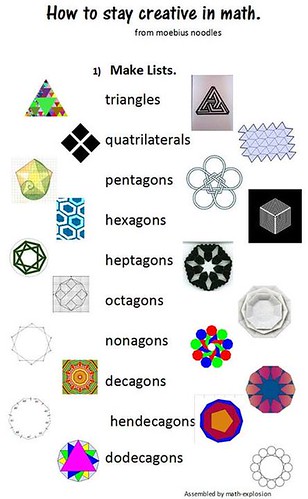
If you like lists, here are some more from our blog:
- Adaptations of activities for toddlers and young kids
- Parent roles in a Math Circle: when grown-ups participate
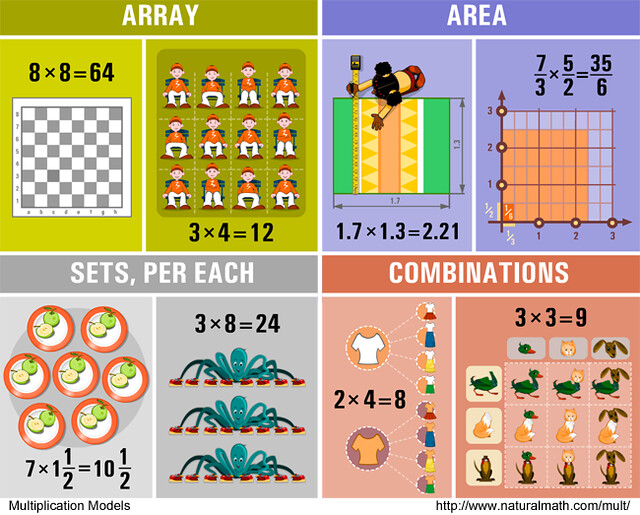
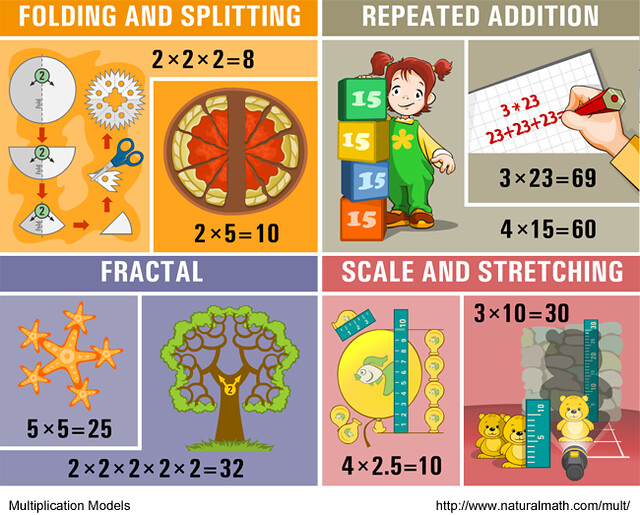
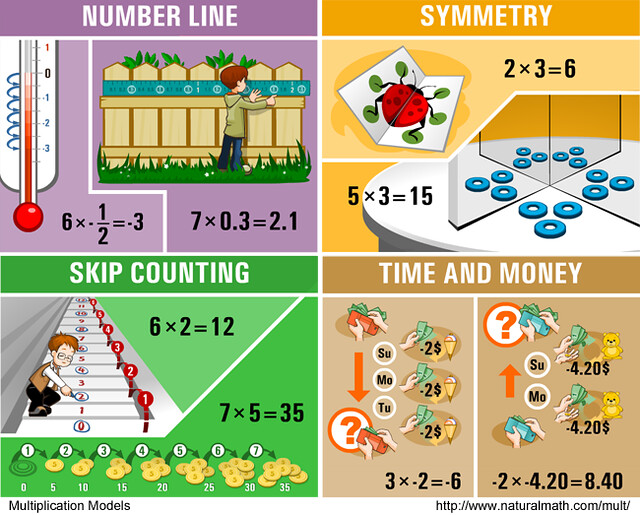
- 12 models of multiplication
- 6 ways to collect pictures
- Becoming invisible and helping students be heroes of their adventures
TocaMates posted a handmade contraption that reminds of the Function Machine activities from the Moebius Noodles book. In response, Michael Kelly wrote:
I like the idea of sending older children to the a photocopier where different amounts of paper go in and are multiplied. (The double sided option adds another variable) Perhaps a shredder that creates 10 strips each time could reverse the idea. But I love the real quality of this splendid machine that caresses the abstract idea of the actual operation into consciousness. There is a line from Maupassant where two lovers sit under a tree as a bird sings beautifully. Neither of them speaks for fear of frightening it away. I think that the appearance of new learning is similar to this lovely metaphor and deserves the same reverence.

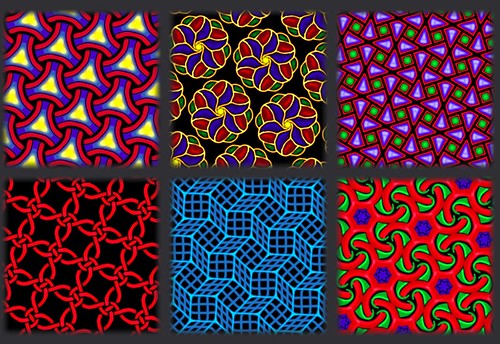
From our Facebook collection of #lapware for toddlers and the young at heart, check out the iOrnament app. Scientists call these patterns crystallographic groups, and mathematicians call them wallpaper groups. Finger painting these days is so mathematical!
Sharing
You are welcome to share the contents of this newsletter online or in print. You can also remix and tweak anything as you wish, as long as you share your creations on the same terms. Please credit MoebiusNoodles.com
More formally, we distribute all Moebius Noodles content under the Creative Commons Attribution-NonCommercial-ShareAlike license: CC BY-NC-SA

Talk to you again on September 30th!
Moby Snoodles, aka Dr. Maria Droujkova


Posted in Newsletter
Parent roles in a Math Circle
This list is from Julia Brodsky’s upcoming book of Math Circle activities, “The Art of Inquiry.”

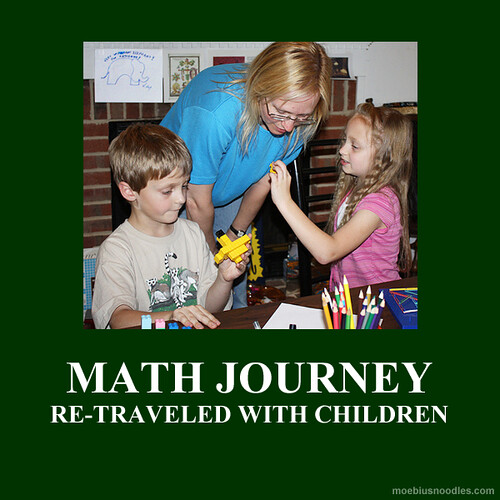
Sometimes your group has a leader and kids, and that’s it. But other times, parents or other grown-ups want to join. What will everybody do? Think of their tasks ahead of time. Some are full-time jobs and some only take a few minutes. Here are examples.
Photojournalist takes close-ups of craft stick creations, candid pictures of kids arguing about paradoxes, and group portraits with everyone holding their pictures of infinity. It takes a few minutes for the kids to be used to the camera, then they ignore it. Ask everyone in the group to sign permissions to take photos.
Storyteller knows what activities are planned, but tells the story of what happened. The storyteller can type up a live report on a laptop, or take notes and email the story to everybody later. Good stories are human: they focus on the kids. They capture the excitement of finally finding that last number in a pattern, the hard work of checking all the possibilities, or the healthy frustration of being stuck in a problem. The stories can later be posted online for everyone to read and discuss.
Valorizer finds interesting math in anything kids do. The math may be different from the goals of the activity. But instead of, “This is wrong” the valorizer comments, “This has an interesting symmetry!” or “I like how the pattern grows.” This teaches kids mini-lessons in math, and the big lesson that math is everywhere. The valorizer needs a good eye for math, and an accepting disposition.
Data collector writes down the darndest things kids say, counts how many times kids used math words and what they were, or charts who worked with whom on a project. This can answer your questions and worries, such as, “Do I really address girls more than boys?” or “Is little Johnny learning any terminology?” or “Do kids concentrate better on bouncy balls or chairs?” You can often see a data collector with a rubric or a tally on a clipboard.
Tech assistant helps kids to spell words, to glue or fold paper, to hold a ruler still, and to read problems. The trick is to help kids do what they want, without taking over their math adventures.
Mediator listens to kids if there is a conflict, and helps all sides to tell their stories. Sometimes a kid may be sad, and needs a dedicated adult for company. This is a nurturing role for an active listener. This job is very sporadic, because inquiry makes kids feel good most of the time.
Inspirers usually sit aside but close, in pairs or small groups. It’s a perfect role for someone who mostly wants to observe. Inspirers chat among themselves (quietly) and build a big tiling puzzle, or draw a six-way symmetrical picture, or come up with the funniest paradox – following what children are doing. Kids peek at these more complex, more grown-up versions of their own tasks, and become inspired. Co-working with interested adults creates a good flow.
Posted in Grow
6 ways to collect multiplication pictures
1. Collect pictures of times table facts for a poster

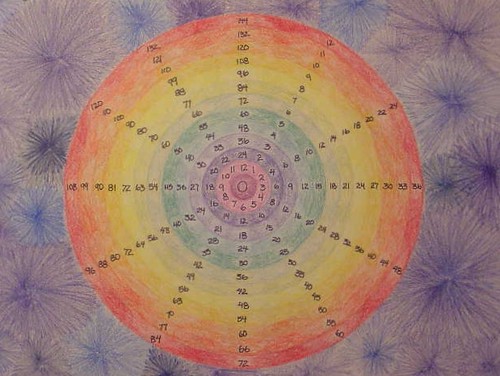
2. Put pictures in Robinsunne’s multiplication clock
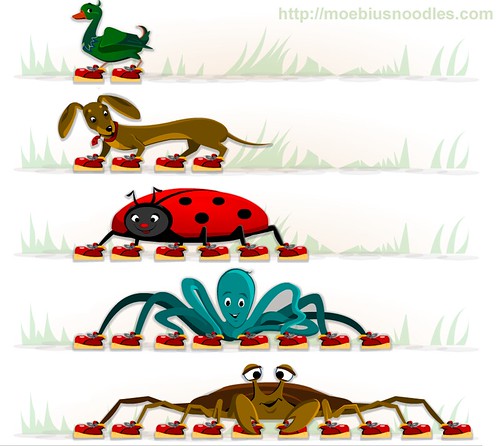
3. Collect from the same context, theme, or story
Animal legs for x2? What multiplication can you find in Star Wars, Harry Potter, or Minecraft?
4. Find examples of as many models as you can
Larger pictures of models are here.
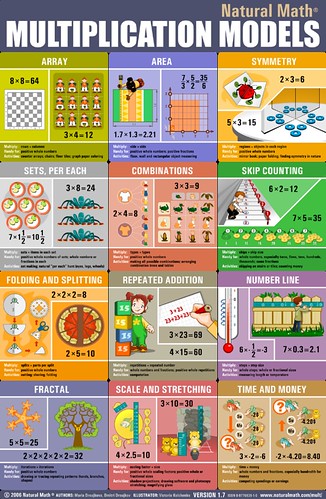
5. Collect iconic examples
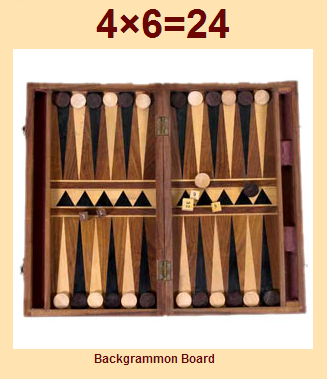
Iconic multiplication is easy to recognize, such as 8×8 for chessboard or 2×5 for fingers on hands. The backgammon board always stands for 4×6 and can’t have another combination of circles.
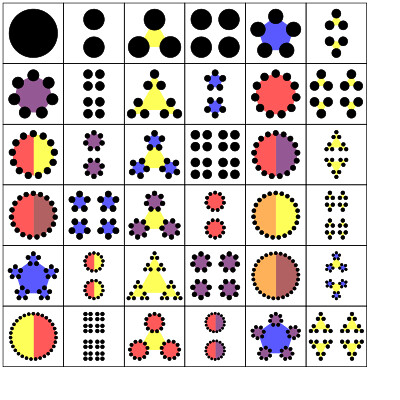
6. Make factorization diagram posters
Sources: Count on Monsters and Math Less Traveled.

Posted in Grow