- Home
- “Yes, And…” Improving Math Play with Improv
- Althea’s Math Mysteries
- Avoid Hard Work, the Workshop
- Avoid Hard Work! …And Other Encouraging Problem-Solving Tips for the Young, the Very Young, and the Young at Heart
- Blocks and Modeling: A Do-It-Yourself Guide to Exploring Geometric Objects – Online Workshop
- Blog
- Books and Goods
- Bright, Brave, Open Minds
- Bright, Brave, Open Minds: A Problem Solving Kaleidoscope. Open online course for parents and teachers
- Camp Logic
- Cart
- Checkout
- Citizen Science Station
- Consulting and Tutoring
- Courses
- Download File
- Easy Complexity and Special Snowflakes Online Math Circle
- Empires: Year-long prealgebra program in a game
- Expedition Everest
- Five Fabulous Activities for Your Math Circle
- Funville Adventures: Math Personified!
- Funville Web Tour
- Hacking Math
- Hiding in Plain Sight: Vyshyvanka Secret Codes
- Home
- HOW do they do it? Creating your own math puzzles
- Inspired by Calculus: Online course for parents, teachers, and their children ages 5-12
- Kingdom On A Wall
- Kingdom on the Wall
- Ko’s Journey Is Discontinued
- Lapware
- Math Books
- Math Cafe
- Math Circles
- Math Circles 1001 Leaders Course
- Math Future event registration
- Math Future: come and talk!
- Math Goggles Challenges
- Math Renaissance
- Math Trek
- Mathematics & Poetry for All
- Meet the authors
- MidSchool Math Digital Math Tools
- Moebius Noodles
- mpsMOOC13: Problem Solving for the Young, the Very Young, and the Young at Heart
- Multiplication Explorers FAQ
- Multiplication Explorers LIVE workshop
- Multiplication Explorers Online Course
- Multiplication Explorers Registration
- Multiplication Explorers, the book
- Multiplication Models Poster
- My Account
- Natural Math Multiplication Course
- Online Logic Summer Camp for Kids!
- Online Summer Calculus for Kids Camp!
- Pay Natural Math
- Playing with Math: Stories from Math Circles, Homeschoolers, and Passionate Teachers
- Reviews of the Moebius Noodles book
- September 25: Math Storytelling Day
- Socks Are Like Pants, Cats Are Like Dogs
- Speaking and events
- Start Here!
- test001
- The Art of Factorization Diagrams
- The Iditarod
- The seven principles of Natural Math
- Transformers: Matrices & Graphs!
- Veronica’s Multiplication: a Natural Math circle online
- WOW! Multiplication – an open course in September 2013
- Ying and the Magic Turtle
- About Natural Math
- Contact Us
- Get Involved
Newsletter January 30, 2013

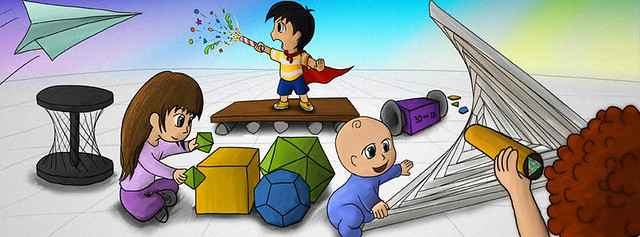
Welcome to adventurous math for the playground crowd! I am Moby Snoodles, and I love to hear from you at moby@moebiusnoodles.com

Book news
We are getting the last reviews in from the volunteer reviewers group that had a go before copy editing. I am so happy to get cheers and kudos from respected colleagues in parenting and mathematics! It’s one thing for me to think our team did a good job; it’s another level of happiness entirely to see what others love about the book.
Blogs and networks
We have been making good friends in the Creative Commons crowd, who change the world one open-source program, video or book at a time. We joined the big worldwide celebration of the ten years of the Creative Commons. This is the video of our talk:
Exciting news! Malke Rosenfeld, the creator of the Math In Your Feet program and a math explorer at The Map Is Not the Territory blog, is joining our team. In her first book review called “Hidden math” Malke goes on a scavenger hunt for ideas such as frieze patterns and parallel lines – in books that aren’t math readers! Malke asks: “What other books are out there that have this kind of ‘hidden’ math?” Have you seen any?

Yelena McManaman adds another gem to my growing collection of hundred charts. Check out her post on why this version works well for young kids.

Have you noticed my new fancy steampunk eyewear and a camera? That’s because we started a series of posts called Math Goggles! If you like field trips, you will love these scavenger hunt adventures. Check out the first one, at the high-tech library at NCSU.
Sharing
You are welcome to share the contents of this newsletter online or in print. You can also remix and tweak anything here as you wish, as long as you share your creations on the same terms. Please credit MoebiusNoodles.com
More formally, we distribute all Moebius Noodles content under the Creative Commons Attribution-NonCommercial-ShareAlike license: CC BY-NC-SA

Talk to you again on February 15th!
Moby Snoodles, aka Dr. Maria Droujkova


Posted in Newsletter
Math Goggles #2 – Home Patternomics


It’s time to put on the Math Goggles (not sure what these are? Head over here to find out). Last week I invited you to search for math at your local library. But this week I haven’t had much free time for impromptu field trips. So I’m donning my goggles and hunting for math around the house. To make things a bit more interesting, I decided to only look for one thing – patterns.
I found my first pattern walking down the stairs. Rise-run-spindle-spindle-rise-run-spindle-spindle… I only have one cat, so the pattern was broken there.

Next I had to put some books away and noticed this weaving pattern on a basket on my bookshelf.

And what about a bookshelf itself? Large shelf, two small shelves, large shelf, two small shelves. Moving to an even larger scale, the furniture arrangement pattern in the room (as noticed by my husband) is “furniture to sit on, furniture to pile books on, furniture to sit on, furniture to pile books on…“

But of all the patterns I found around the house today, this one had to be my favorite. I had to replace batteries in one of the toys and here it was, positive-negative-positive-negative terminals.
What patterns can you find in your house?
P.S. Once you start noticing patterns, it gets very addictive. So here’s a cool and very relaxing idea for a collaborative pattern hunt video I found on YouTube. Next time you have a few minutes to spare, doodle the patterns you notice. Here’re my doodles, including the furniture arrangement pattern, the stairs pattern (reflected and rotated), the batteries pattern and a few more.

Posted in Grow
Book review: “What’s unnatural?” by Jeremiah Dyke
Making abstract entities into characters with their own looks and personalities is a great idea related to many traditions. “Flatland” featured creatures embodying shapes in different dimensions.
More recently, moe anthropomorphisms embody entities such as Wikipedia:

The book “What’s unnatural” by Jeremiah Dyke of Hands on Math has a cute anthropomorphic numeral 1 as its main character. The images overall have peaceful, slow and steady feel to them, which I like a lot.

The character goes through different number lands, largely corresponding to the extension of numbers from natural to real. It’s a useful topic, and representing it spatially makes a lot of sense, given the traditional Venn diagrams showing relationships among numbers.
Here are things I would change in the next version of the book.
Show number properties rather than telling about them. It’s done beautifully for negatives, but not for other number types.

I was concerned about negatives presented as “positive numbers that carry a bar.” A negative number is a single entity, even though it takes two symbols to represent it. The same goes for fractions represented as “numbers chopped into pieces” – a fraction is a number in its own right, a single number at that. This seems like a minor point, but kids get confused around this issue.
I would continue to the land of reals rather than irrationals, because it breaks the previous pattern. Natural-whole-rational-… is the previous adventure, and the next in line seems real, not irrational.
I would use the book with kids for its roleplaying potential, and the strength of its overall travel metaphor. Thank you for making it!
Posted in Grow
Math is Not a Worksheet
httpv://www.youtube.com/watch?v=sBMhZfBzqyQ
Some time ago Maria and I had a chance to present the Moebius Noodles project at an Open Source/Creative Commons event hosted by Red Hat. As we tried to distill our big ideas into a 3-minute presentation, we had to choose the most important points to cover. They are
- In many ways, young kids already are mathematicians.
- Beautiful mathematical adventures are all around us.
- Math is not a worksheet.
- Freeing ideas and experiences (i.e. through Creative Commons licensing) is critical for success.
Want details? Check out a video of our presentation.
If you are developing, teaching, or playing rich early math games, we want to hear from you!
P.S. Can you tell this was my first public presentation?
Posted in Grow


